

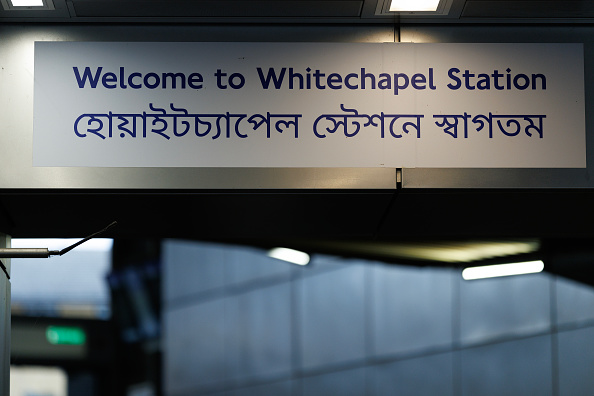




Far-right UKIP supporters have been banned from holding a protest march in Whitechapel after police warned it could lead to serious violence, including clashes with residents.
Police imposed conditions under the Public Order Act preventing the march from going ahead on January 31, instructing UKIP to find a less “provocative” location in the capital.
Any of their supporters attempting to enter Tower Hamlets to participate could face arrest under the new conditions.
This is the second time in three months that a UKIP march has been blocked. In October, supporters were due to gather in Tower Hamlets, framing the event as a “crusade” to ‘reclaim Whitechapel’ — a message they have now attempted to rebrand as a Christian-focused protest.
The Met stressed UKIP was not banned. They noted similar geographic restrictions were imposed on other groups holding protests on the same day, including the Central London Anti-Fascists and the Palestine Coalition, which suggested alternative routes to avoid potential conflicts with Jewish Londoners attending nearby synagogues.
Tower Hamlets has a long history of resisting far-right activity, from the 1936 Battle of Cable Street against fascist Blackshirts to more recent opposition to the National Front and the English Defence League, particularly among the borough’s large Bangladeshi population.
While some far-right voices have framed the ban as an infringement on free speech and “two-tier” policing, public order laws allow police to impose conditions where serious disorder is anticipated.
Protests have previously been stopped, or groups banned, when there was a risk of serious public disorder. A controversial fringe Muslim group was banned in 2010 after it gained prominence for threatening to protest in Wootton Bassett, a decision that was applauded by supposed ‘free speech’ supporters in the conservative media.
“There’s nothing remotely Christian about UKIP”
“Metropolitan Police Deputy Assistant Commissioner James Harman explained that public order laws give officers the authority to impose restrictions when there is a credible risk of serious disorder: “It would be reckless to allow an event to go ahead when we understand there’s a risk of serious violence to members of the community and to our officers, and for that reason, we have made the decision to impose conditions.
“We can deploy significant numbers of officers to physically stand between the groups – a situation that will likely result in clashes between protesters and police and also between opposing groups. This risks injury to officers, protesters and members of the public – which we see as preventable,” he said.
UKIP’s controversial far-right leader, Nick Tenconi, said the decision was “absolutely shocking.”
“The Met have decided that an explicitly religious procession of Christian worship and adoration be banned because Islamists will be violent, he posted on social media.
“Britain is a Christian country, and we will not surrender to the Islamists.”
Tenconi’s comments sparked backlash on social media with critics accusing UKIP of using religion as a cover for provocation.
“There’s nothing remotely Christian about UKIP. The “protest” has been moved. You can still march. Just not in the place you were hoping to stir up trouble in,” said one poster.
An army vet said on X: “None of you own a bible that you actually read and use to wave at Muslims. Take it from an army veteran, you’re a weak pathetic boy and all your minions are weaker still.”
Another added. “I live in Whitechapel. I’m not Muslim but I don’t want Tenconi and his followers cluttering up my streets.”