
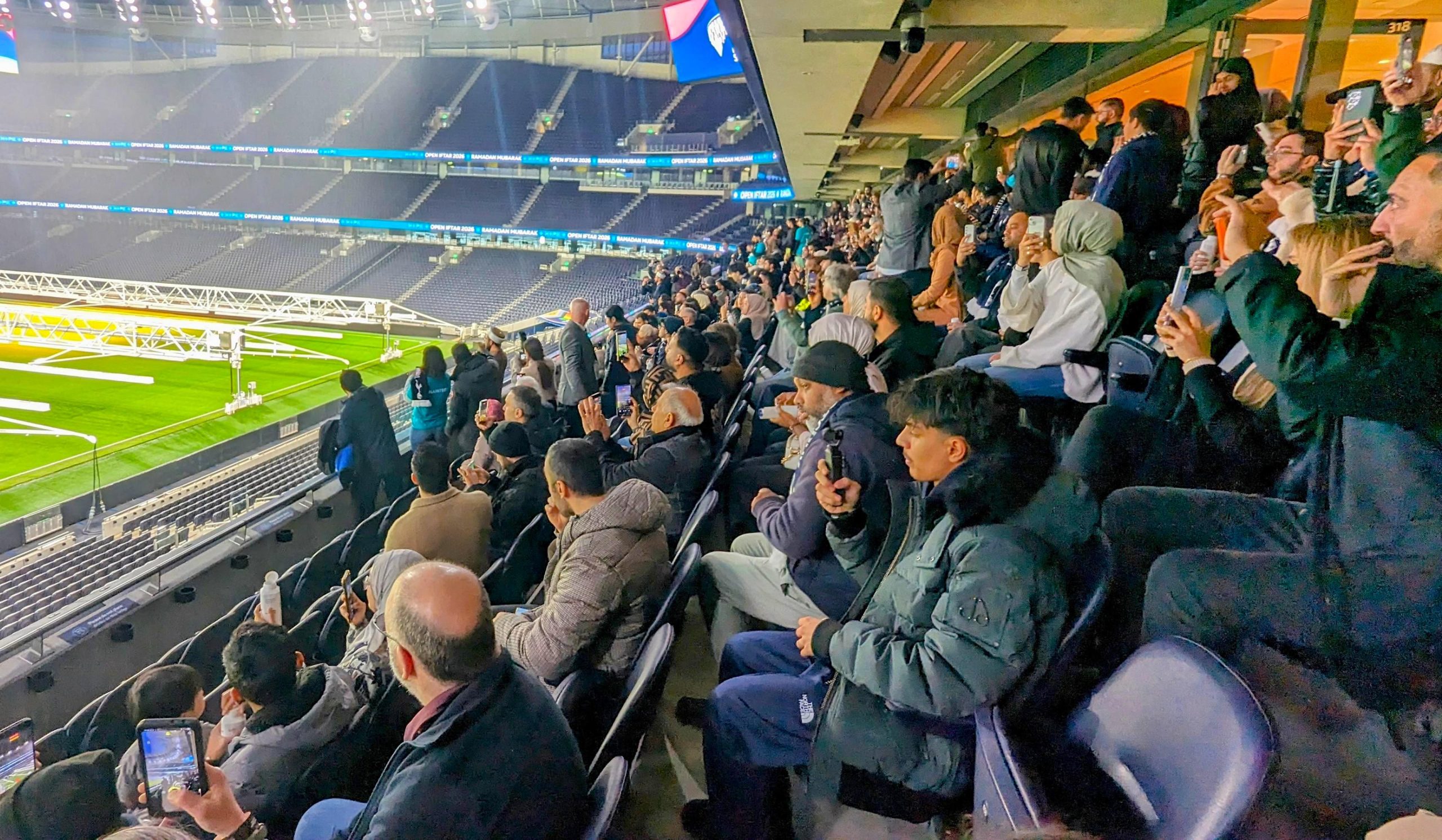





Around 300 people gathered at Tottenham Hotspur Football Stadium this week for a special Open Iftar event.
The Ramadan Tent Project partnered with the Tottenham Hotspur Foundation to bring communities together during the holy month.
Families, residents and supporters attended the evening, which featured contributions from Spurs’ race and cultural heritage supporters’ association, Spurs REACH, and TV presenter and Spurs fan Reshmin Chowdhury.
Guests listened to speeches before heading out onto the stadium to hear the call to prayer echo across the ground. Worshippers then performed Maghrib prayers before sitting down together to share a meal.
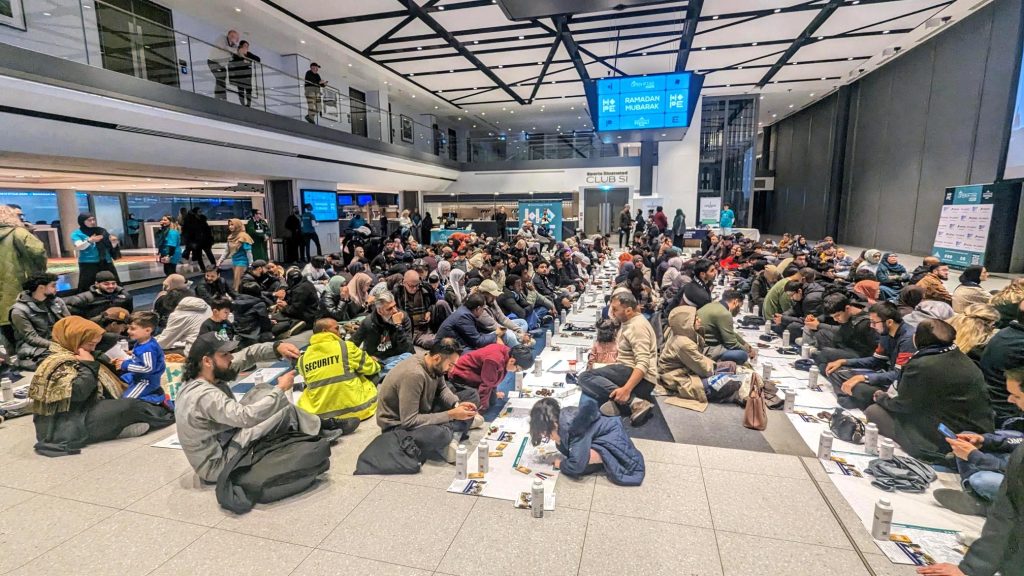
The event formed part of the Ramadan Festival organised by the Ramadan Tent Project, whose flagship “Open Iftar” initiative invites people of all backgrounds to experience Ramadan together.
“This is now our 13th year organising the Ramadan Festival, and part of the festival is our flagship initiative — the Open Iftar,” said Omar Salha, the charity’s founder and chief executive.
“Open Iftar invites people of all faiths and none to come together to understand more about the month of Ramadan and the Iftar experience — to raise awareness, empathy and understanding between one another.”
Over the past decade, the initiative has been hosted at some of Britain’s most iconic venues, including Lord’s Cricket Ground, Windsor Castle, and Shakespeare’s Globe.
“We look at iconic landmarks and institutions and bring Ramadan into those spaces to showcase that Britain is diverse,” Salha said.
“We are proud to represent a pillar of Britain’s rich cultural ecology.”
Football, faith and belonging
For many attendees, holding the event at a football stadium carried particular meaning.
Open Iftar’s have taken place at other major football venues, including Wembley Stadium as well as the stadiums of Chelsea, Manchester City, Aston Villa and Brentford.
Sachin Patel, co-founder of Spurs REACH, said gatherings like this demonstrate how football can act as a bridge between communities.
“I think it’s brilliant when communities come together, especially this footballing community,” he said.
“We’ve got people from lots of different faiths, religions and cultural heritages here today. It’s about learning about other people’s cultures and sharing the moments that matter. And I think that’s really important”
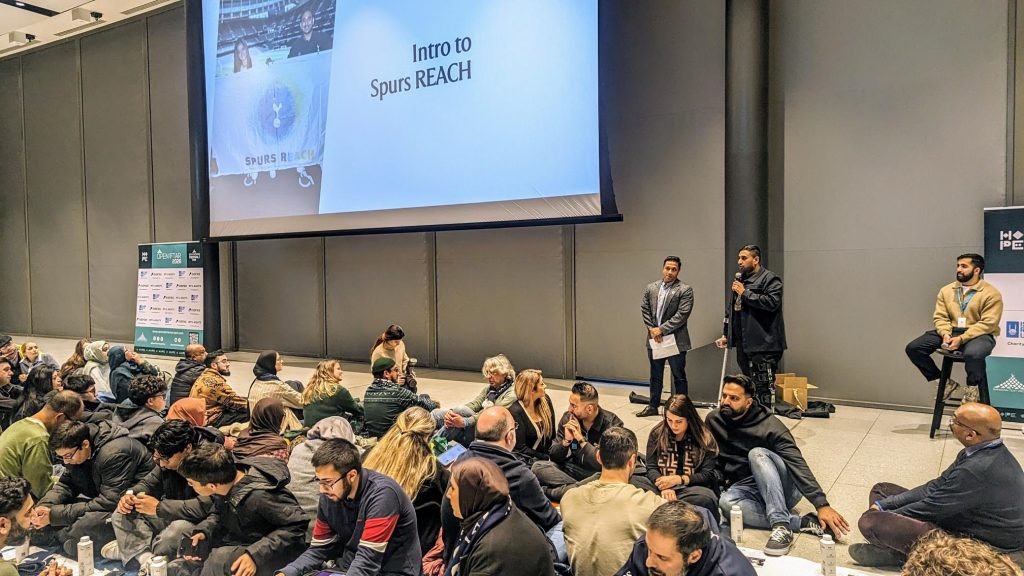
He added that events like the Open Iftar help people who might not normally feel comfortable in football spaces.
“Some people may have felt a football stadium isn’t a place for them. But tonight they’ve come here, seen the place, and seen people from different faiths and cultures together. They realise this space can be for them. They feel included and they feel welcome.”
Tottenham’s location in one of the UK’s most diverse areas makes such initiatives particularly meaningful, he added.
“It speaks volumes that the club wants to make sure everyone feels welcome — whether on a match day or through community activities like this,” said Patel.
Salha also emphasised the role that institutions like Tottenham Hotspur play in connecting communities with spaces they might otherwise never enter.
“Their mission is to serve the local community and open those doors,” he said.
“Many people attending tonight may never have stepped into the stadium before. And they’re experiencing it in a completely different context — celebrating Ramadan together.”
A message of hope amid tensions
Events like these take place against a wider backdrop of rising hostility towards Muslim communities in Britain in recent years.
While football has often been seen as a more tolerant space — partly due to the prominence of Muslim players — debates about faith and sport still surface.
In a recent Premier League match between Leeds and Manchester City, boos rang around the stadium as the game briefly paused to allow Muslim players to break their fast. Although many fans later said the boos stemmed from confusion about the unscheduled break, social media discussions showed hostility from right-wing and far-right media towards players who stopped to observe the fast.
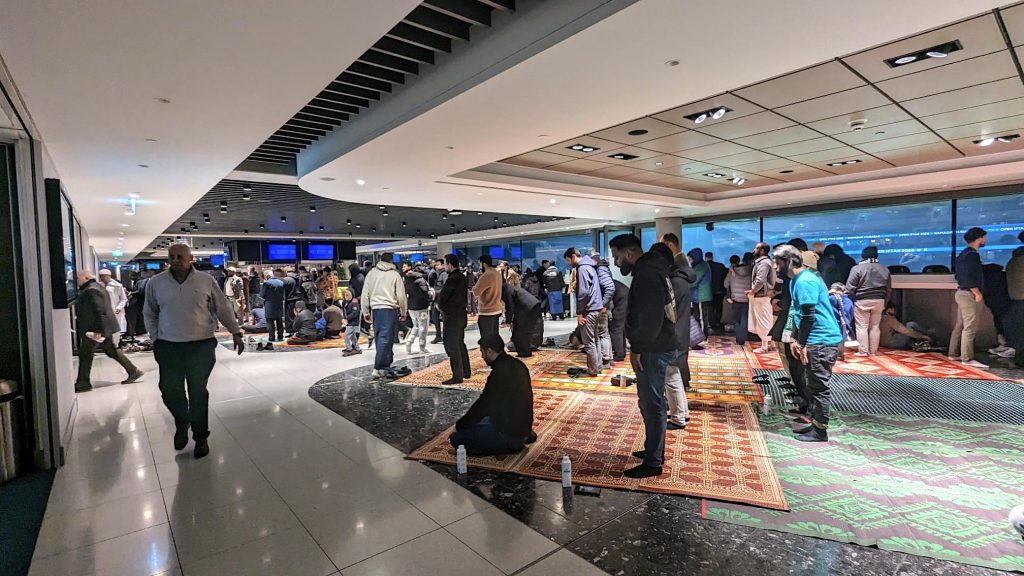
And events like this inevitably anger those who would rather see divisions remain.
For Salha, moments like that only reinforce the importance of initiatives that foster understanding.
“Any event that brings communities together to create conversation and dialogue is worth having,” he said.
Despite challenges and rising hate crime statistics, he believes the UK still provides a unique environment where such gatherings can take place.
“I don’t think the events we do will be possible outside the UK.
“That’s why the UK is such a unique space. Despite the challenges and increases in hate crimes, it’s important that we don’t give in to hate, but we turn to hope. That’s why it’s our festival theme for this year.
“We’re creating spaces of hope, compassion and understanding.
“And honestly — who wouldn’t want to be part of that?”