

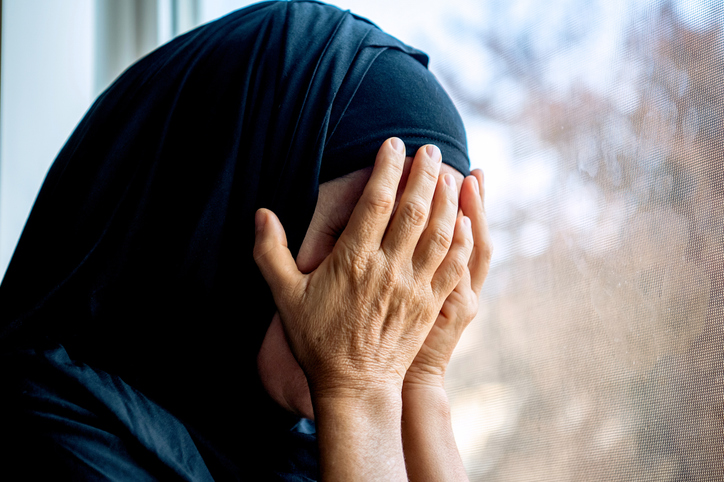



The UK government has introduced a new working definition of anti-Muslim hate and announced plans to appoint an adviser to help tackle anti-Muslim hostility.
The definition follows months of consultation and debate over how anti-Muslim hatred should be defined and addressed in public policy.
The government also said it intends to appoint an anti-Muslim hate tsar — similar to the existing role focused on tackling antisemitism.
The new definition states:
Anti-Muslim hostility is intentionally engaging in, assisting or encouraging criminal acts – including acts of violence, vandalism, harassment, or intimidation, whether physical, verbal, written or electronically communicated – that are directed at Muslims because of their religion or at those who are perceived to be Muslim, including where that perception is based on assumptions about ethnicity, race or appearance.
It is also the prejudicial stereotyping of Muslims, or people perceived to be Muslim including because of their ethnic or racial backgrounds or their appearance, and treating them as a collective group defined by fixed and negative characteristics, with the intention of encouraging hatred against them, irrespective of their actual opinions, beliefs or actions as individuals.
It is engaging in unlawful discrimination where the relevant conduct – including the creation or use of practices and biases within institutions – is intended to disadvantage Muslims in public and economic life.
Debate over the definition
The new definition has received mixed reactions from Muslim organisations and commentators.
The advocacy group Muslim Engagement and Development (MEND) said it was concerned that the wording does not go far enough.
“The government’s new definition of Islamophobia is watered-down and omits the term “Islamophobia”, using “anti-Muslim hostility” instead,” said MEND on X.
“This risks narrowing the focus to individual acts of prejudice, rather than recognising discrimination as a structural phenomenon across public life.
“British Muslims are not seeking privilege, they are asking for equality and protection.”
Others have welcomed the move as a positive step.
Shabir Randeree, chair of the British Muslim Trust, which is partly funded by the government, said: “The definition published today is welcomed and should be a step forward that will help guide institutions that have too often been too slow or too weak in their responses to incidents a tolerant and respectful country like ours must never accept.”
Not surprisingly, the decision has drawn venom from some right-wing and far-right figures, with several outlets and online commentators opposing the government’s move.
Rising hate crime figures
The government guidance said the new definition comes amid growing concerns about discrimination against Muslim communities.
Figures from the Home Office show that hate crimes targeting Muslims have reached record levels. In the year leading up to March 2025, 4,478 such crimes were recorded — an increase of around 20% compared with the previous year — accounting for almost half of all religious hate crimes in the UK.
The guidance noted that Anti-Muslim hostility not only affects Muslims but also other people thought to be Muslim – including Sikhs.
“Assumptions are made about people from diverse ethnic, racial and cultural backgrounds and they are treated as a collective group and negatively stereotyped, irrespective of their actual opinions, beliefs or actions as individuals – a process sometimes described as racialisation,” it said.
It added that the definition will not prohibit free speech but will create clearer parameters for understanding when legitimate debate crosses into unacceptable hatred.
The definition is a working framework and may evolve over time as understanding of the issue develops.