

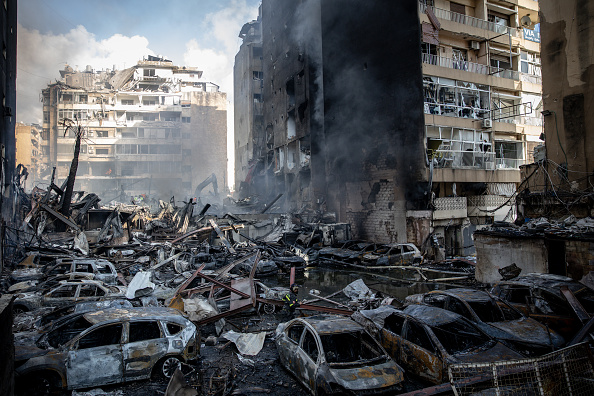




Despite the US and Iran announcing a two-week ceasefire, Israel has continued to attack Lebanon, raising doubts over the stability of the agreement.
Washington and Tehran declared a ceasefire late on Tuesday, though confusion quickly emerged over its scope.
Despite the agreement, Israel issued evacuation orders for parts of Beirut as it continued to attack the country.
Iranian President Masoud Pezeshkian condemned the strikes, saying they “blatantly violate” the ceasefire. Lebanon’s health ministry reported that 203 people were killed on Wednesday.
Israeli strikes on Lebanon draw regional backlash, with calls to stop the attacks despite the U.S.-Iran ceasefire.
— Islam Channel (@Islamchannel) April 9, 2026
Fund honest independent Muslim journalism:https://t.co/mh7oRfN5SW pic.twitter.com/WVrmxADRx5
US Vice President JD Vance described the situation as a “legitimate misunderstanding,” claiming Iran had wrongly assumed the ceasefire extended to Lebanon.
“The Iranians thought that the ceasefire included Lebanon, and it just didn’t. We never made that promise. We never indicated that was going to be the case,” Vance said.
The agreement announced by Pakistani Prime Minister Shehbaz Sharif on social media appeared to contradict that account, which stated that Iran and the US “along with their allies, have agreed to an immediate ceasefire everywhere, including Lebanon and elsewhere.”
European leaders have also since called for Lebanon to be explicitly included in any ceasefire framework.
Trump said that after conversations with Iran, he agreed to halt planned strikes, contingent on Iran reopening the Strait of Hormuz “completely, immediately, and safely.”
Iran’s control of the Strait of Hormuz, a critical global shipping route and a key source of leverage against the US, has become its main source of leverage.
Tehran said it had closed the waterway to vessels in response to Israeli strikes on Lebanon and an attack on its oil infrastructure on Lavan Island.
The White House denied the strait had been closed, with press secretary Karoline Leavitt claiming there had been an “uptick of traffic in the strait.”
Only a limited number of ships have passed through the vital corridor since the ceasefire announcement.