

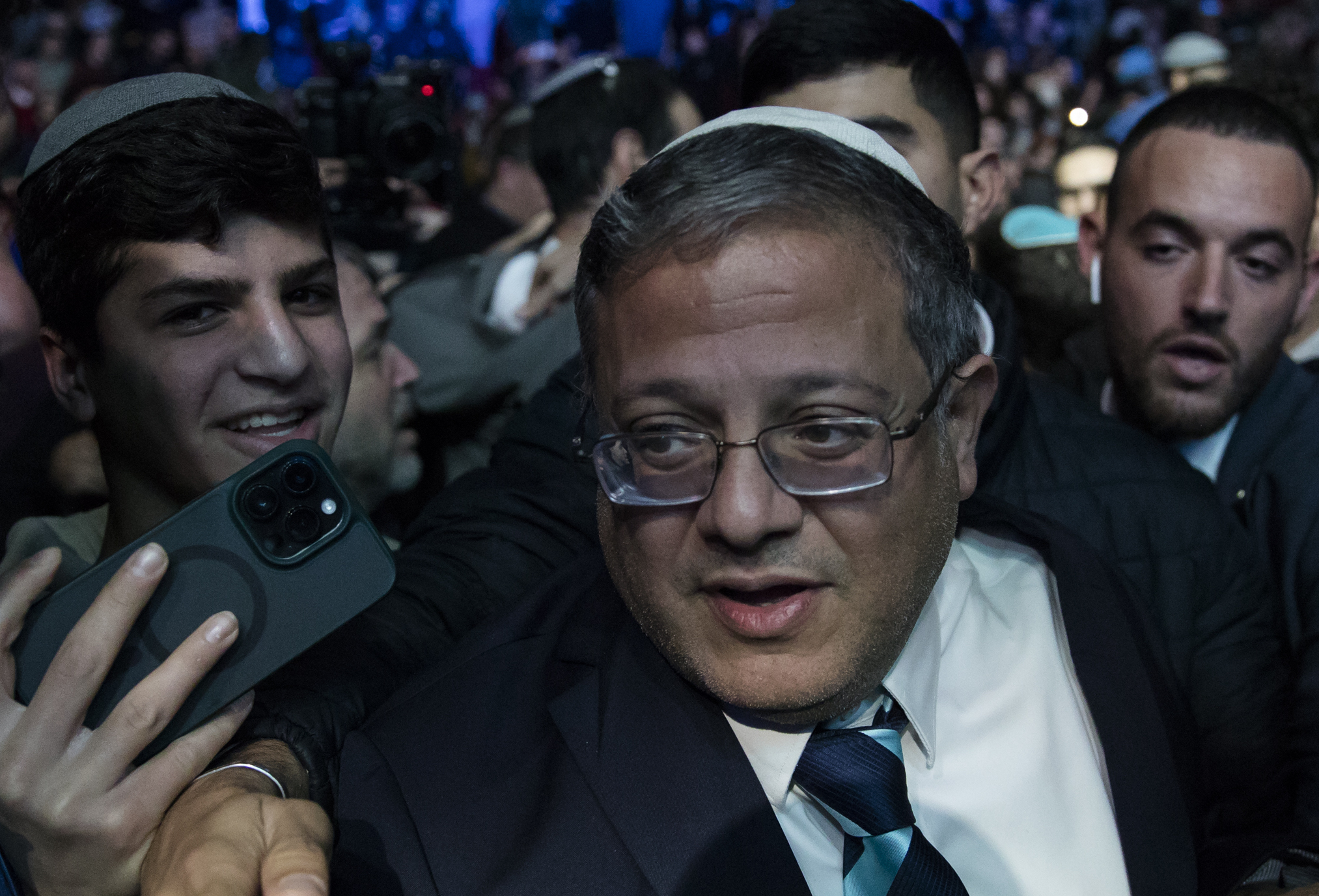





Israel’s far-right National Security Minister said he felt like the “owner” of Al-Aqsa Mosque after entering the compound in occupied East Jerusalem, days after it reopened following an unprecedented closure of more than 40 days.
Itamar Ben-Gvir made the incendiary comments days after thousands of worshippers performed prayers on Friday, having been barred from entering the mosque for over a month, which included during Ramadan and Eid al-Fitr.
Al-Aqsa Mosque is Islam’s third-holiest site. Jews refer to the area as the Temple Mount, believing it is the site of two ancient temples.
“Today, I feel like the owner here,” Ben-Gvir said in a video released by his office.
“There is still more to do, more to improve. I keep pushing the Prime Minister [Benjamin Netanyahu] to do more and more; we must keep rising higher and higher.”
His visit comes amid a wider escalation of violations against Islamic and Christian holy sites in East Jerusalem, alongside continued restrictions on Palestinian worshippers’ access to Al-Aqsa.
Jordan, the custodian of the site, condemned the visit as a breach of the longstanding status quo, describing it as “a desecration of its sanctity, a condemnable escalation and an unacceptable provocation”.
The office of Palestinian President Mahmoud Abbas warned that such actions risk further destabilising the region.
Repeated incursions
Israeli authorities have resumed near-daily incursions by ultranationalist groups into the Al-Aqsa compound, with visits becoming longer and more frequent.
The mosque is governed by a decades-old arrangement recognising its Islamic character and placing authority over access and worship in Muslim hands. Under this understanding, Jewish visitors are permitted to enter but not to pray.
But Israel has increasingly violated this arrangement by allowing raids into the compound and prayer by ultranationalist Israelis, often with the backing of senior Israeli ministers, including Ben-Gvir.
These repeated incursions have raised concerns that the status quo could be formally altered, potentially expanding the space or time allocated for Jewish prayer at the site.