




Maternal healthcare is a basic human right. Yet, during emergencies, it’s women and children who often suffer the most.
A report by Muslim Hands, “Giving hope to mothers,” shows how broken health services during armed violence, instability and disasters can have devastating consequences for the most vulnerable members of society.
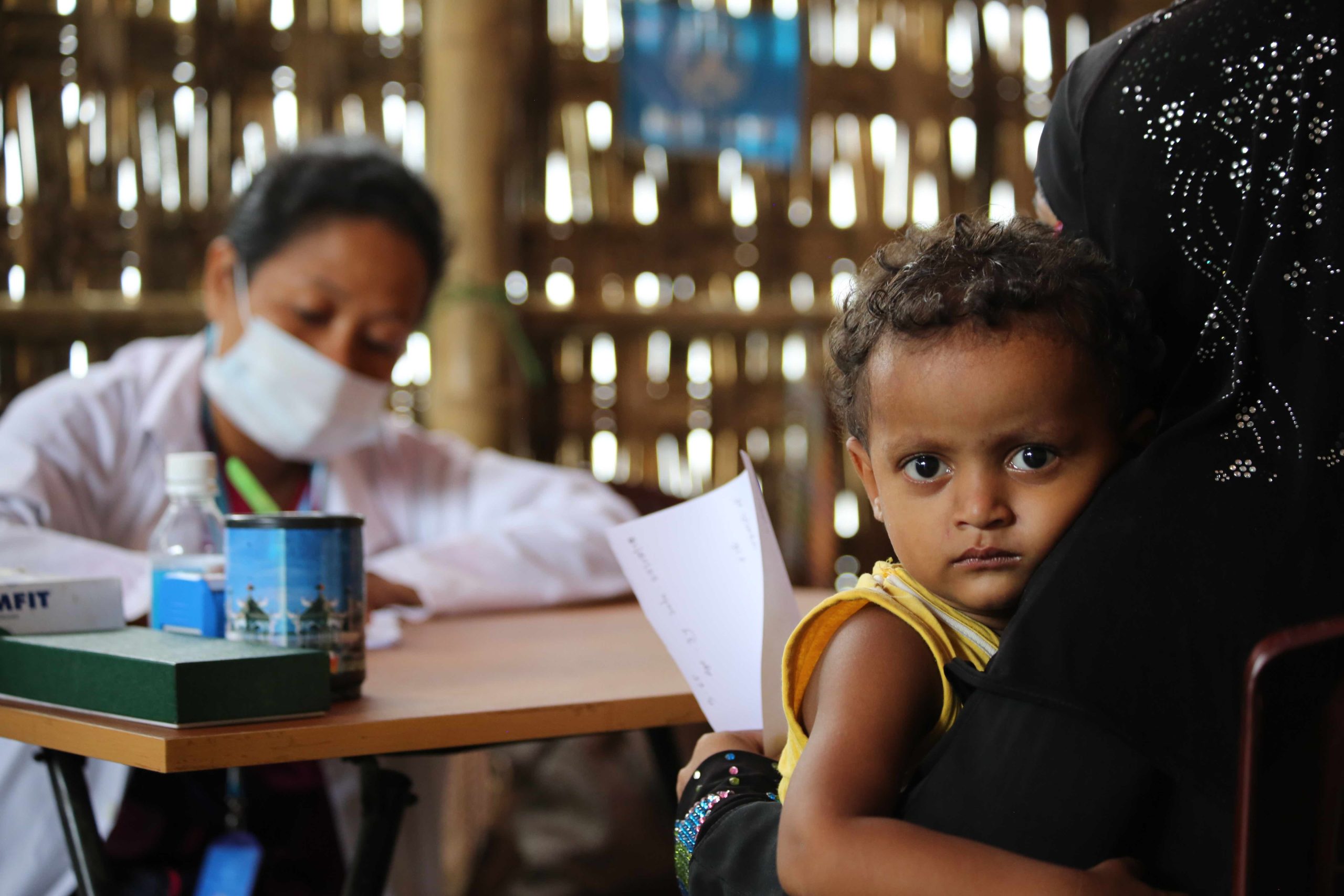
The Motherkind clinics and health centres run by Muslim Hands offer special care and support to mothers and children in communities affected by crisis.
The report shares powerful stories from the women and girls who receive support.
We hear from Fartuun and Haawo in Somalia, who walked for days through drought-affected areas to reach safety and access maternal healthcare.
Farida in Afghanistan was married at the age of 14 and is now receiving vital antenatal care through the Motherkind clinic.
Meanwhile, Roksana in the Rohingya refugee camp is dealing with pregnancy amid poverty, displacement and difficult living conditions.
Sadly, these stories are not unique. The report shares some striking statistics:
- There were 260,000 maternal deaths globally in 2023 (WHO)
- Conflict-affected countries account for 61% of global maternal deaths despite only 25% of live births.
- Afghanistan’s maternal mortality ratio is among the world’s highest at 521 deaths per 100,000 live births.
- Over 275,000 beneficiaries supported across clinics in Somalia, Afghanistan, and Yemen in the past year.
- More than 305 million people worldwide currently need humanitarian assistance.
The role of the Motherkind clinics
Muslim Hands runs clinics in Somalia, Afghanistan, Bangladesh, Yemen, and Gaza to provide maternal healthcare for those who need it.
“Across Somalia, Afghanistan, Yemen, Gaza and the Rohingya camps of Cox’s Bazar, mothers described many of the same concerns: whether they would have a safe delivery, whether their children would be healthy and whether they could access the support they needed during pregnancy and childbirth,” says the report.
“For many, these worries are compounded by food insecurity, inadequate shelter, limited healthcare and the daily challenges of life in crisis-affected communities,” it adds.
Somalia continues to have one of the highest lifetime risks of maternal death globally (WHO, 2025), while Afghanistan’s maternal mortality ratio remains among the highest in the world, at an estimated 521 deaths per 100,000 live births (WHO, 2025).
In Yemen, only around 20% of functioning health facilities can provide maternal and child health services (UNFPA, 2025), while maternal mortality rates in some parts of the Rohingya camps are estimated to be 44% higher than elsewhere in Bangladesh.
Meanwhile, pregnant women and newborns in Gaza are facing ‘catastrophic’ conditions, according to UNFPA. In the first half of 2025, there was a 41% decline in births in Gaza, compared to the same period in 2022.
The report shares the perspectives of doctors and nurses working in these clinics, showing what care looks like on the front lines.
“As humanitarian needs continue to grow, the importance of accessible maternal healthcare cannot be overstated,” says the report.
“Conflict, climate-related shocks, displacement and economic hardship continue to place millions of mothers and babies at risk, particularly in fragile settings where health systems are already under immense strain.
“Maternal health is not a privilege. It is a right. Every woman deserves the opportunity to experience pregnancy and childbirth safely, regardless of where she lives or the circumstances she faces.”
Read the full report to learn more about the challenges mothers and babies face in crisis zones, and see how you can help support the work of Muslim Hands.