





A UK employment appeal tribunal has upheld a ruling that Bristol academic Dr David Miller was unlawfully dismissed because of his anti-Zionist beliefs.
In its ruling, the Employment Appeal Tribunal (EAT) dismissed most of the University of Bristol’s appeal and upheld an earlier employment tribunal ruling that Dr Miller’s anti-Zionist beliefs constitute a protected philosophical belief under Section 10 of the Equality Act 2010.
The judgment also said: “ It was coherent to describe as “racist” an ideology that promoted the establishment of a state for only one race of people (Group A) in a territory that contained a large number of people of a different race (Group B).
“If the ideology was said also to involve the migration of members of Group A into the territory with the support of an imperial power to dislodge an indigenous population comprised of Group B, it could legitimately and coherently be described as colonial and imperialistic.”
The University of Bristol dismissed Miller in October 2021 following comments he made about Israel and Zionism.
Miller challenged his dismissal, arguing that his anti-Zionist beliefs were protected under the Equality Act, that he had been harassed because of those beliefs, and that he had been unfairly dismissed.
In 2024, an employment tribunal ruled in his favour, and the university appealed that decision.
Tribunal rejects university’s appeal
The EAT upheld the earlier tribunal’s finding that the university’s decision to dismiss Miller amounted to discrimination.
“The decision to dismiss the claimant and the refusal of his appeal against that dismissal were each found to be unlawful acts of direct discrimination,” the judgment said. “The dismissal was held to be unfair, and wrongful.”
Responding to the ruling, Miller wrote on X: “We have set a binding legal precedent! Anti-Zionism is now a protected philosophical belief under the Equality Act 2010. Full stop.”
“This is a public humiliation for the genocidal Zionist regime, whose assets in Britain bullied the University into sacking me and then dragged them into this futile appeal. Their legal strategy has collapsed. Their pressure campaign has spectacularly backfired,” he added.
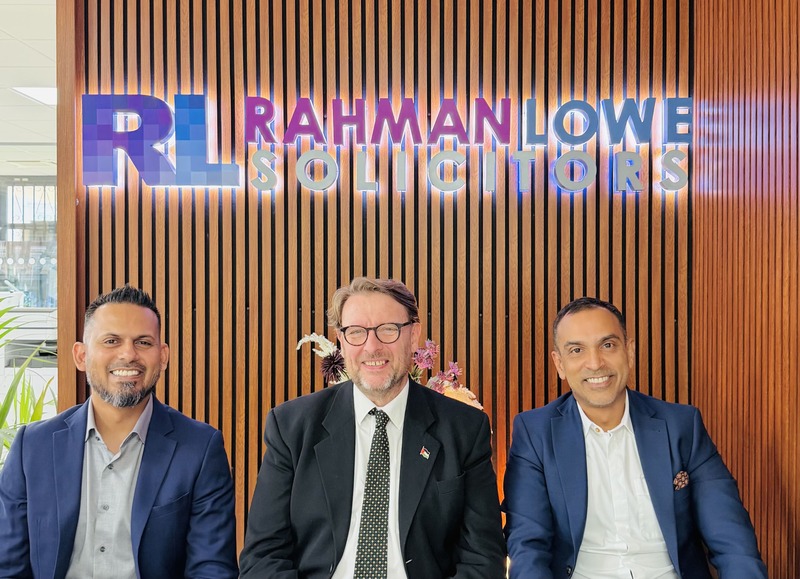
A statement on the website of Rahman Lowe Solicitors, who represented Dr Miller, read: “The EAT upheld the decision of the Employment Tribunal and concluded that Dr Miller was discriminated against because of his philosophical belief that Zionism is inherently racist, imperialist, and colonial, and ought to be opposed. The EAT held that his anti-Zionist beliefs constitute a protected belief under the Equality Act 2010 (EqA); he was dismissed because he manifested those beliefs and as the dismissal was tainted by discrimination, he was unfairly dismissed.
“This means that it is unlawful to discriminate against someone because they hold those beliefs. The successful appeal outcome reinforces that controversial beliefs are not excluded from protection under the EqA simply because they generate complaints or public controversy.”
A University of Bristol spokesperson said the university was “disappointed” by the outcome but remained committed to protecting freedom of speech “exercised appropriately and in line with our codes of conduct”.
Image credit: Rahman Lowe Solicitors