




What is the significance of an eclipse in Islam, and what is Salat al-Kusuf, the eclipse prayer Muslims perform when it occurs?
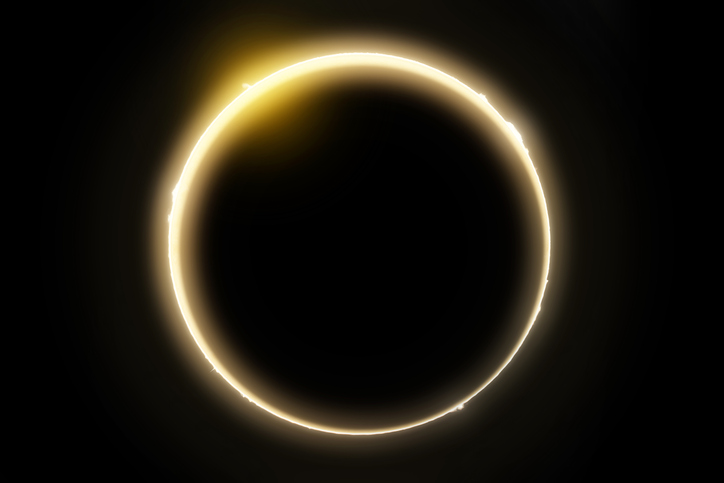
This week, many people across Europe and the UK will see a partial or total solar eclipse.
According to Islamic teachings, eclipses are powerful signs of Allah (SWT) and reminders of His greatness.
The Quran refers to the precise movement of the sun and moon:
“The sun and the moon follow courses exactly computed.” (Quran 55:5)
The Prophet Muhammad (SAW) also made clear that eclipses are a sign from Allah and not caused by the birth or death of anyone.
A solar eclipse occurred on the day the Prophet’s son Ibrahim died, leading some people to believe the eclipse had occurred because of his death.
Narrated Ibn `Umar: The Prophet (ﷺ) said, “The sun and the moon do not eclipse because of the death or life (i.e. birth) of someone but they are two signs amongst the signs of Allah. When you see them offer the prayer.” (Sahih al-Bukhari 1042)
How do you pray the eclipse prayer, Salat al-Kusuf?
Salat al-Kusuf is a special and unique prayer performed during a solar eclipse.
It is not obligatory but highly recommended, with some schools of thought recommending that it be performed in congregation.
The prayer consists of two long rakahs, but unlike other prayers, each rakah contains two bowings (ruku) rather than one.
After reciting Al-Fatihah and a long Surah, the worshipper performs the first ruku. Instead of going directly into sujud (prostration), they rise again, recite Al-Fatihah and another portion of the Quran, and then perform a second ruku before proceeding to sujud.
The eclipse is a moment for Muslims to pause, reflect and turn towards Allah through prayer, dhikr, dua and contemplation.
Rather than being a cause for superstition or fear, it is an opportunity to remember the power and greatness of the Creator.