



By Muslim Hands
As the month of Dhul Hijjah fast approaches, millions of Muslims across the world will be offering a Qurbani, following in the footsteps of the Prophet Ibrahim (as).
Here is everything you need to know to make the most of this religious rite.
What does Qurbani mean?
The word ‘Qurbani’ is derived from the Arabic, ‘qurban’, which has its root in the word ‘qurb’ – meaning ‘nearness.’ The purpose of offering Qurbani is to draw near to Allah (swt). Through Qurbani, we reaffirm that we completely submit to Allah and we are willing to sacrifice whatever is asked of us to be close to Him and gain His pleasure, just as Prophet Ibrahim (as) did thousands of years ago.
When should Qurbani be performed?
Qurbani must be performed after the Eid al-Adha prayer on the 10th of Dhul Hijjah and before sunset on the 12th of Dhul Hijjah. This year, Dhul Hijjah begins on the 17th of May and Eid al-Adha will begin on the night of 26th of May 2026, dependant on the moon sighting.
Who should give Qurbani?
Offering a Qurbani is incumbent on a Muslim adult who possesses wealth above the threshold of Nisab. At Muslim Hands we offer Qurbani’s in over 20 countries including Sudan, Pakistan and the UK, with prices starting at £25.
What animals can be sacrificed?
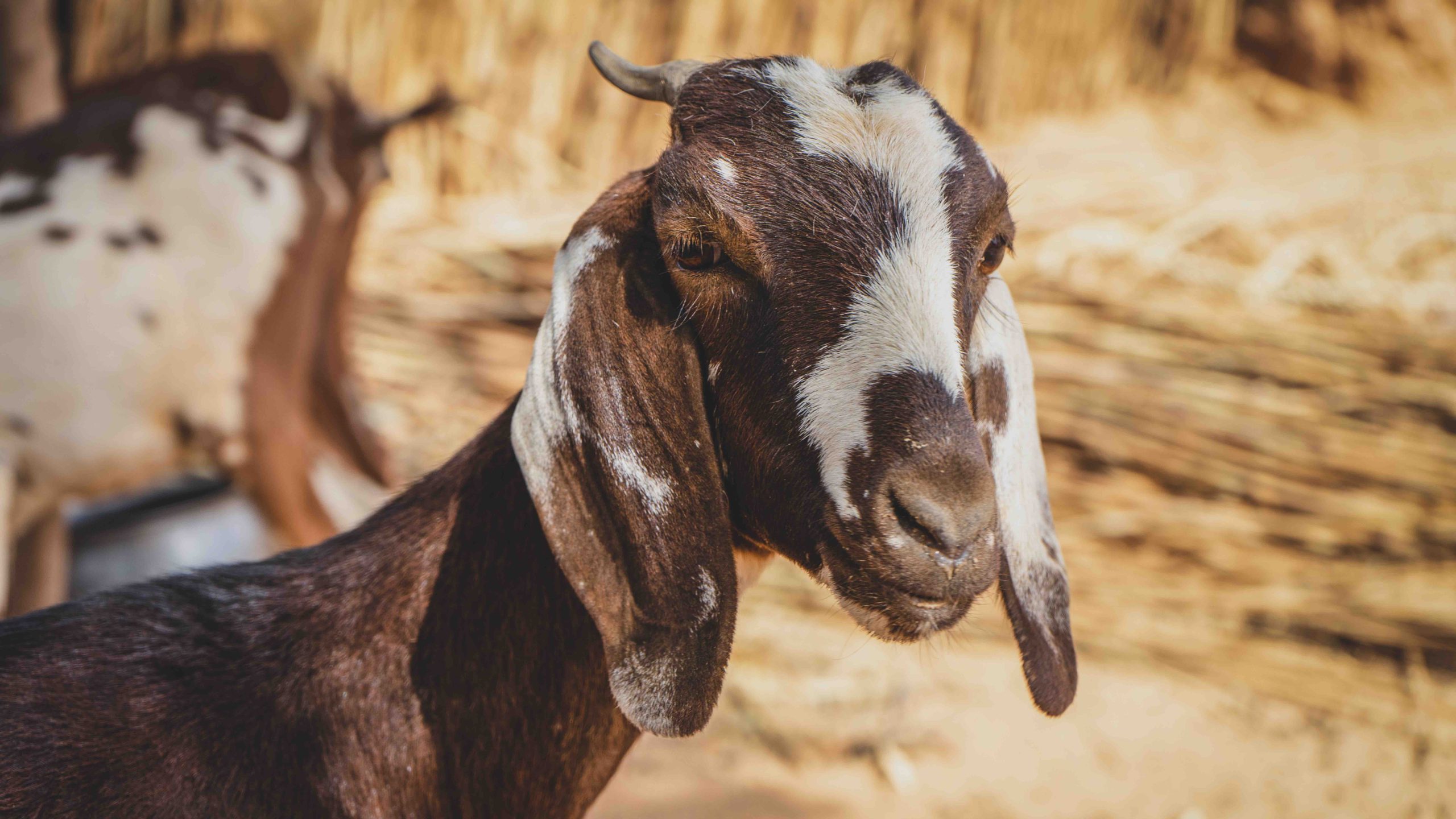
Animals that are eligible for sacrifice during Qurbani include cows, goats, lambs and camels. The animals should be healthy, at the minimum age of one year for a lamb or goat, two years for a cow and five years for a camel. They should be well-fed, able to walk competently and free from any defects.
At Muslim Hands we make sure the animals we sacrifice during Qurbani meet these criteria, as well being sourced locally, to support local farmers and local economies.
What animal did the Prophet Ibrahim (as) sacrifice?
According to Islamic tradition, the Prophet Ibrahim (as) was sent by Allah (swt) a ram for sacrifice, which was known as the ram of Paradise. Ibn Abbas (ra) said it was, ‘A ram which had grazed in Paradise for forty years’ [Tabari].
Fun fact: The horns of this ram were passed down through Ismail’s (as) descendants and were kept hanging in the Ka’bah by the Quraysh as an important relic. After the Prophet (saw) conquered Makkah, the ram’s horns were kept in the Ka’bah, though they were covered up. The ram horns remained there until the Ka’bah was damaged by fire in the Siege of Makkah in 683; the horns were burned and lost in this battle.
What happens to the meat after the sacrifice?
Traditionally, once the Qurbani has been performed, the meat is divided into three equal parts. One third is given to disadvantaged families and the rest is kept by the giver for their own family or shared with friends and loved ones.
When you give an organic UK Qurbani with Muslim Hands, the meat will be divided into three equal parts. Two-thirds of the meat will be vacuum-packed to ensure freshness and sent to you by the fourth day of Eid al-Adha.
The remaining third is given to our Open Kitchens who will use the meat for hot nutritious meals and distribute to our service users, which include low-income families, people experiencing homelessness and refugees.
The Sunnah Qurbani
After the Prophet (saw) performed his own sacrifice, he also sacrificed a second animal on behalf of those Muslims who couldn’t afford to sacrifice their own. We refer to this as a Sunnah Qurbani. It was reported by Abu Talhah (ra) that, ‘The Prophet (saw) sacrificed for the one who could not sacrifice from his ummah, one who bore witness to the Oneness of Allah and (his) Prophethood’ [At-Tabarani and Ahmad]. It allowed families who were not otherwise able to share in the blessings of the sacrifice to draw closer to their Lord through the generosity of their fellow Muslims.
The best ten days
The first ten days of Dhul Hijjah are also known as the best ten days of the Islamic calendar.
The Prophet (saw) said ‘There are no days in which righteous deeds are more beloved to Allah than these ten days’ [Abu Dawud].
The day of Arafah also occurs during this time, which is known as the best day of the year, where fasting on this day expiates sins of the previous and coming year [Muslim].
How can I make the most of the best ten days?
Make the most of the first ten days of Dhul Hijjah by increasing your worship which can include fasting, dhikr and giving charity. With the Muslim Hands’ Best Ten Days automated giving tool you can automate your Zakat and Sadaqah donations, so you don’t miss out on giving during the greatest days of the year:
- First choose your cause – Pick from five important causes: Zakat Fund, Where Most Needed, Water Fund, Orphans Fund and Blessed Bakeries Fund. You can give to just one or give to them all. It’s up to you!
- Split your donation – Give equally across all ten days or choose to give more on the Day of ‘Arafah and Eid al-Adha to not miss out on these blessed days.
- Automate your giving – Checkout with your card details and we’ll collect the donation over the next 10 days as per your instruction.
How can I give my Qurbani, Sunnah Qurbani and automate my giving during Dhul Hijjah?
- To find out how to give your Qurbani, including a Sunnah Qurbani to Muslim Hands and automate your giving on the Best Ten Days, visit muslimhands.org.uk.
*Sponsored content