

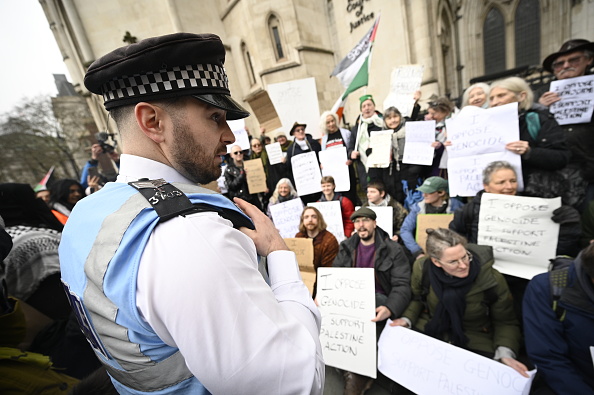





The High Court has ruled that the government’s decision to ban Palestine Action under terrorism legislation was unlawful — an embarrassing blow to the government that could have major implications for ongoing prosecutions involving supporters of the group.
In a ruling delivered on Friday, three senior judges found the proscription to be disproportionate and said it amounted to a serious interference with rights to protest and freedom of expression in the UK.
The Court concluded that the organisation’s activities had not met the high legal threshold required for designation as a terrorist group.
Palestine Action co-founder Huda Ammori described the decision as a “monumental victory for both our freedoms here in Britain and in the struggle for freedom for the Palestinian people”.
She added the government’s move to proscribe the group would “forever be remembered as one of the most extreme attacks on free speech in recent British history.”
The ban technically remains in place as the government prepares an appeal.
The Metropolitan Police said officers would no longer arrest individuals solely for displaying support for Palestine Action, and would instead focus on gathering evidence for potential enforcement at a later stage. It admitted the situation was “unusual”.
Supporting or belonging to the group remains a criminal offence, carrying a potential prison sentence of up to 14 years. The proscription last July drew widespread condemnation and triggered protests with thousands of people arrested arrested.
Campaign group Defend Our Juries says more than 2,700 people have been detained, with hundreds charged with alleged offences relating to expressions of support. The legal status of many of those cases is now uncertain pending further court proceedings.
Ammori said: “It would be profoundly unjust for the government to try to delay or stop the High Court’s proposed order quashing this ban while the futures of these thousands of people hang in the balance, many of whom are elderly or disabled and facing up to 14 years imprisonment for this entirely peaceful protest.”
Court: criminal law sufficient to address conduct
Around 100 supporters gathered outside the Royal Courts of Justice in central London as news of the ruling emerged, cheering and chanting “Free Palestine”.
In their judgment, Dame Victoria Sharp, Mr Justice Swift and Ms Justice Steyn said Palestine Action “promotes its political cause through criminality and encouragement of criminality” but concluded that existing criminal law was sufficient to deal with such conduct.
During proceedings, lawyers for Palestine Action argued the group does not advocate violence, stating that serious incidents involving harm to people or property “are not the norm, they are rare”.
Dame Sharp said the proscription was “disproportionate” and resulted in a very significant interference with the right to freedom of speech and the right to freedom of assembly.”
The Court also found that when the then home secretary Yvette Cooper decided to ban the organisation, insufficient consideration had been given to the impact on protest rights and to the government’s own policy tests for proscription under the Terrorism Act.
Home Secretary Shabana Mahmood said she was “disappointed” by the ruling and confirmed the government intends to challenge the decision in the Court of Appeal.
Earlier in the month, six Palestine Action activists were acquitted of aggravated burglary following a high-profile trial over a direct action at an Elbit Systems UK factory in Bristol.